
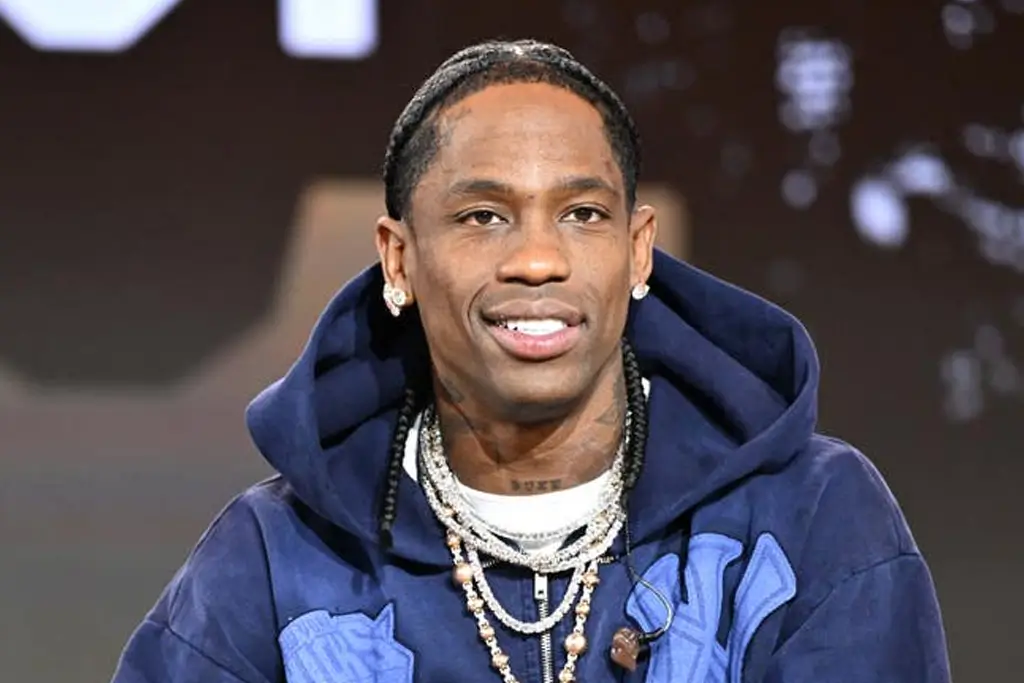
Travis Scott has joined several prominent hip-hop artistes in filing a brief to the Supreme Court of the United States opposing the use of rap lyrics in a criminal death-penalty case.
The legal submission, known as an amicus brief, argued that presenting rap lyrics as evidence violated free speech protections under the United States Constitution.
The Case of James Garfield Broadnax
The challenge supports James Garfield Broadnax, a Black man sentenced to death in 2009 for a double murder in Garland, Texas.
During the sentencing phase, prosecutors presented more than 40 pages of Broadnax’s handwritten lyrics to a nearly all-white jury to argue he posed a “future danger,” a requirement under Texas capital punishment law.
Hip-Hop Artists Join the Legal Brief
The brief was also signed by prominent hip-hop figures including:
- Killer Mike
- T.I.
- Young Thug
- Fat Joe
The artists argued that prosecutors in the Texas case had used the defendant’s rap lyrics as literal evidence of criminal intent.
Travis Scott’s Legal Argument
In his separate brief, Travis Scott contended that penalising an individual for their artistic expression creates an “unconstitutional content-based penalty.”
Scott warned that such tactics effectively put the entire genre of rap music on trial.
His legal team includes high-profile attorney Alex Spiro, who emphasised that rap, like other artistic forms, often contains fictional storytelling, hyperbole, and performance elements.
Implications for Artistic Expression
Supporters of the brief say the Supreme Court’s review could establish legal boundaries for how artistic expression, particularly in rap music, is treated in criminal trials.
Critics, however, note that prosecutors often view violent or explicit lyrics as contextual evidence of criminal behaviour.
The Supreme Court has not yet announced whether it will hear the case. The filing marks one of the most high-profile interventions by artists defending rap as protected speech in the United States.








Leave a comment